

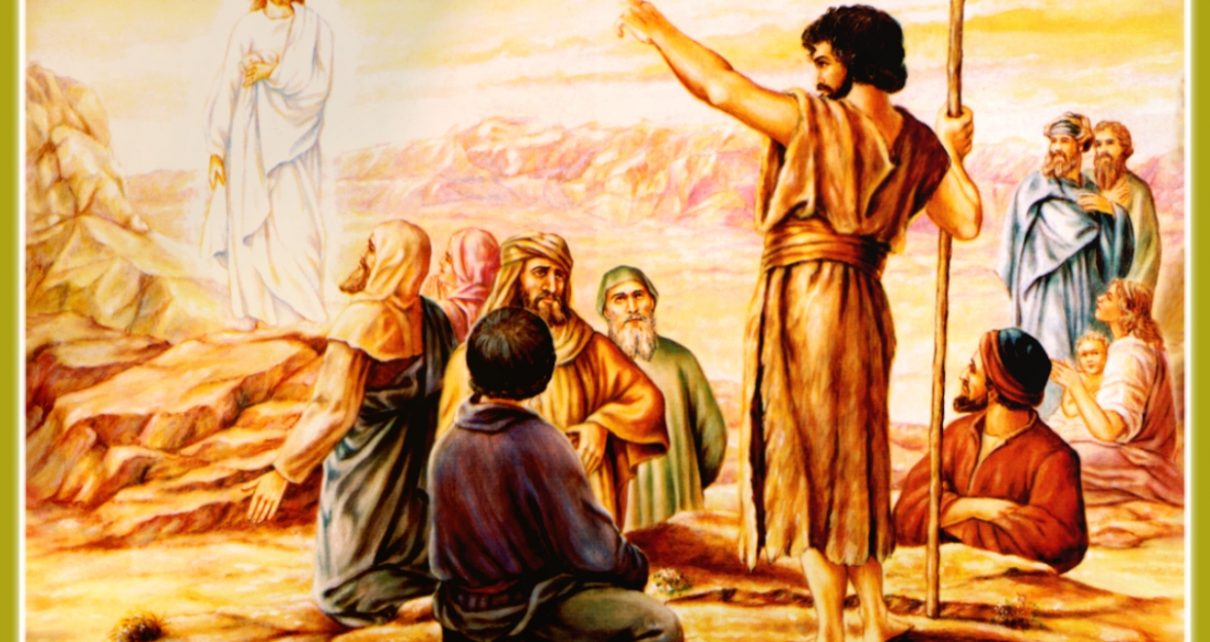
Consequences of Prophetic Mission
— St John Mary Vianney (M).
Introduction
What would be our reaction if someone told us right in our face that we are not the people we are supposed or pretend to be? Look what happened to Jeremiah and John the Baptist. Jeremiah has to fight for his life. John the Baptist loses it. Would we welcome prophets better than the people in their time, even if they are right? It is so difficult to face the truth about ourselves. Because it is difficult to change, to be open to true conversion. Let us pray in this Eucharist for the courage to face this disturbing truth.
1 Reading Jeremiah 26:11-16, 24
The priests and prophets said to the princes and to all the people,
“This man deserves death;
he has prophesied against this city,
as you have heard with your own ears.”
Jeremiah gave this answer to the princes and all the people:
“It was the LORD who sent me to prophesy against this house and city
all that you have heard.
Now, therefore, reform your ways and your deeds;
listen to the voice of the LORD your God,
so that the LORD will repent of the evil with which he threatens you.
As for me, I am in your hands;
do with me what you think good and right.
But mark well: if you put me to death,
it is innocent blood you bring on yourselves,
on this city and its citizens.
For in truth it was the LORD who sent me to you,
to speak all these things for you to hear.”
Thereupon the princes and all the people
said to the priests and the prophets,
“This man does not deserve death;
it is in the name of the LORD, our God, that he speaks to us.”
So Ahikam, son of Shaphan, protected Jeremiah,
so that he was not handed over to the people to be put to death.
Responsorial Psalm 69:15-16, 30-31, 33-34
R. (14c) Lord, in your great love, answer me.
Rescue me out of the mire; may I not sink!
may I be rescued from my foes,
and from the watery depths.
Let not the flood-waters overwhelm me,
nor the abyss swallow me up,
nor the pit close its mouth over me.
R. Lord, in your great love, answer me.
But I am afflicted and in pain;
let your saving help, O God, protect me.
I will praise the name of God in song,
and I will glorify him with thanksgiving.
R. Lord, in your great love, answer me.
“See, you lowly ones, and be glad;
you who seek God, may your hearts revive!
For the LORD hears the poor,
and his own who are in bonds he spurns not.”
R. Lord, in your great love, answer me.
Alleluia Matthew 5:10
R. Alleluia, alleluia.
Blessed are they who are persecuted for the sake of righteousness
for theirs is the Kingdom of heaven.
R. Alleluia, alleluia.
Gospel Matthew 14:1-12
Herod the tetrarch heard of the reputation of Jesus
and said to his servants, “This man is John the Baptist.
He has been raised from the dead;
that is why mighty powers are at work in him.”
Now Herod had arrested John, bound him, and put him in prison
on account of Herodias, the wife of his brother Philip,
for John had said to him,
“It is not lawful for you to have her.”
Although he wanted to kill him, he feared the people,
for they regarded him as a prophet.
But at a birthday celebration for Herod,
the daughter of Herodias performed a dance before the guests
and delighted Herod so much
that he swore to give her whatever she might ask for.
Prompted by her mother, she said,
“Give me here on a platter the head of John the Baptist.”
The king was distressed,
but because of his oaths and the guests who were present,
he ordered that it be given, and he had John beheaded in the prison.
His head was brought in on a platter and given to the girl,
who took it to her mother.
His disciples came and took away the corpse
and buried him; and they went and told Jesus.
Commentary
Herod and John are men of contrasting characteristics. They could not have been more different from each other. Herod lived in opulence, consumed by worldliness. John lived in freely chosen poverty and austerity, far away from worldly ways. Herod had external command over the army and people. John had spiritual command over them. Herod had no genuine character or authenticity—he copied the desires and fears of others, as is evident in his fear of his own people and his willingness to bend over backwards to please others. John had convictions and ideals that defined his life, and his radical commitment to truth would cost him his life. John lived and died in an inner freedom that no one could take away. Herod lived in fear with many nightmares from his wrongdoings.
Who do I resemble more in my daily life—Herod or John the Baptist?
Blessing
We should be grateful when people make us face the truth about ourselves, also and especially when it is painful. It is a splendid occasion to change for the better. May almighty God bless you, the Father, and the Son, and the Holy Spirit. Amen!