

Love as the spirit of the Law of God
Introduction
Christ has liberated those who believe in him from the Jewish law, but that does not mean that they can do just anything. Freedom is not licentiousness, for that would make them slaves again, of what Paul calls “the works of the flesh.” They are now free and urged to do the good works of the Spirit.
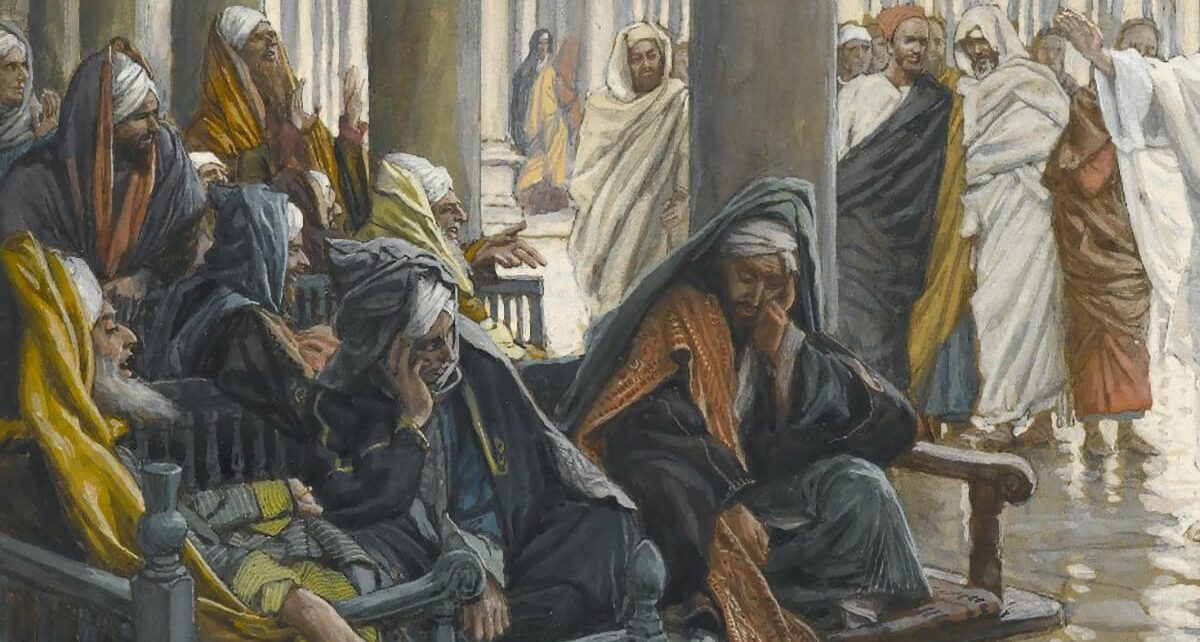
It is surprising that Jesus could cure all ills – the blind, the deaf, lepers, yes, and also sinners aware of their failures. But he could not cure Pharisees and scribes from their “open-eyed” blindness. Jesus does perhaps not attack them so much for their literal observance of the last detail of the law but for getting so absorbed by the details of the law that they did not see the roots of all laws, justice and love. This is also the key teaching of Paul in his letter to the Galatians: not laws but the Spirit.
1 Reading Galatians 5:18-25
Brothers and sisters:
If you are guided by the Spirit, you are not under the law.
Now the works of the flesh are obvious:
immorality, impurity, licentiousness, idolatry,
sorcery, hatreds, rivalry, jealousy,
outbursts of fury, acts of selfishness,
dissensions, factions, occasions of envy,
drinking bouts, orgies, and the like.
I warn you, as I warned you before,
that those who do such things will not inherit the Kingdom of God.
In contrast, the fruit of the Spirit is love, joy, peace,
patience, kindness, generosity,
faithfulness, gentleness, self-control.
Against such there is no law.
Now those who belong to Christ Jesus have crucified their flesh
with its passions and desires.
If we live in the Spirit, let us also follow the Spirit.
Responsorial Psalm 1:1-2, 3, 4 and 6
R. (see Jn 8:12) Those who follow you, Lord, will have the light of life.
Blessed the man who follows not
the counsel of the wicked
Nor walks in the way of sinners,
nor sits in the company of the insolent,
But delights in the law of the LORD
and meditates on his law day and night.
R. Those who follow you, Lord, will have the light of life.
He is like a tree
planted near running water,
That yields its fruit in due season,
and whose leaves never fade.
Whatever he does, prospers.
R. Those who follow you, Lord, will have the light of life.
Not so the wicked, not so;
they are like chaff which the wind drives away.
For the LORD watches over the way of the just,
but the way of the wicked vanishes.
R. Those who follow you, Lord, will have the light of life.
Alleluia John 10:27
R. Alleluia, alleluia.
My sheep hear my voice, says the Lord;
I know them, and they follow me.
R. Alleluia, alleluia.
Gospel Luke 11:42-46
The Lord said:
“Woe to you Pharisees!
You pay tithes of mint and of rue and of every garden herb,
but you pay no attention to judgment and to love for God.
These you should have done, without overlooking the others.
Woe to you Pharisees!
You love the seat of honor in synagogues
and greetings in marketplaces.
Woe to you!
You are like unseen graves over which people unknowingly walk.”
Then one of the scholars of the law said to him in reply,
“Teacher, by saying this you are insulting us too.”
And he said, “Woe also to you scholars of the law!
You impose on people burdens hard to carry,
but you yourselves do not lift one finger to touch them.”
Commentary
The words Jesus addressed to the Pharisees and the Teachers of the Law are more an expression of his grief and frustration over their failure in understanding the heart of God’s Law than an expression of pure anger. The heart of God’s commandment is love. God’s Law is to be like a yoke that is easy, a burden that is light (Matt 11:30). Sadly, the religious leaders and teachers of the Law have misunderstood the intent of the commandments and converted them into unbearable burdens for people. God’s intention in instituting tithes of the first fruits was to provide people with an opportunity to express their thanksgiving for God’s blessings (Deut 14:22; Lev 27:30). However, the leaders made it into an excruciating burden for people by demanding that they pay tithes of everything they owned or produced. All the while, they hardly cared for the heart of the Law that demanded love, justice, equality, and compassion.
Do I make the same mistake of giving greater importance to external rituals and observances of religion over and above love and compassion which are at the heart of our faith?
Blessing
We believe in Jesus Christ. We recognize him as our Lord and Savior. This commits us, then, to practice justice and love of God and neighbor. May almighty God bless you, the Father, and the Son, and the Holy Spirit. Amen!