

We Are Equals Before The All-Loving Messiah
Introduction
Our constant temptation is to look up to people in positions of power, wealth, influence, and to disregard the poor and the weak and to discriminate against them and also against half of humanity-women/children. It demands courage to associate with the poor and to stand up for their rights. The Gospel is not to be abused for social agitation to divide and polarize, for Christ came to save the rich too, but it demands social consciousness and involvement. The prophets and the Gospels – also the apostles – have hard-hitting passages about commitment to the poor and to social justice; we should do away with our tendency to deprive them of their impact by explaining them spiritually.
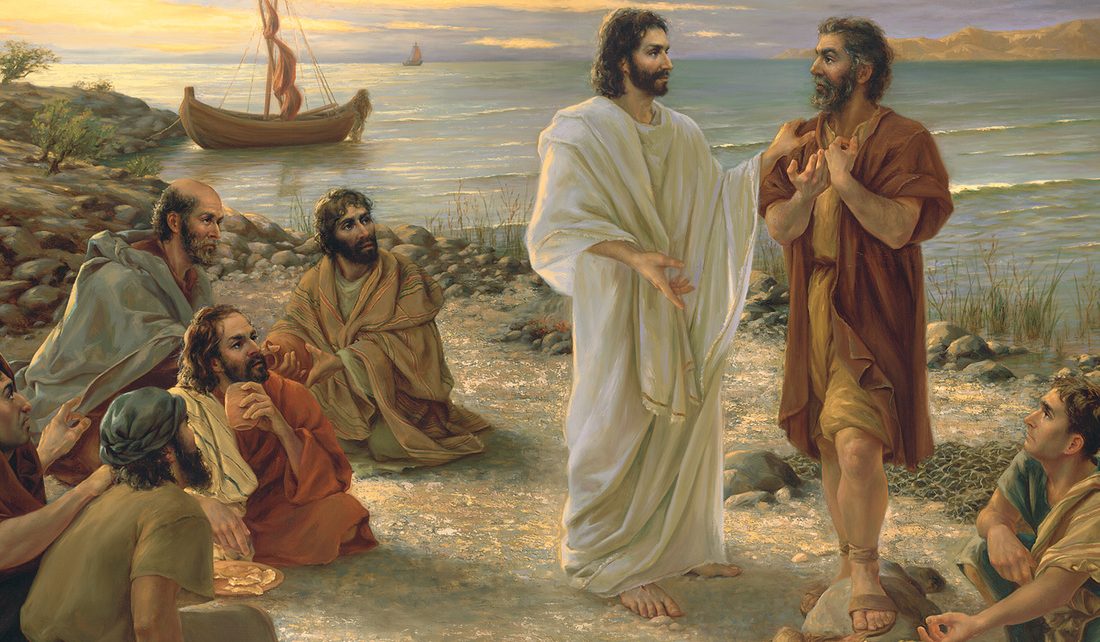
The Gospel tells us today that Jesus asked his disciples one day who they thought he was, and Peter said: You are the Christ, that is, the promised Messiah. But when Jesus told them, he would save people by his suffering and death before his resurrection, Peter protested. He could not accept a suffering Lord. For us too, it is hard to accept pain and contradiction. We grumble and protest: “Why me?” But, we have to learn from Jesus that pain and hardship are part of life, and often the way to life and joy. People who have suffered for others understand what love means.
1 Reading: James 2:1-9
My brothers and sisters, believers in our glorious Lord Jesus Christ must not show favouritism. Suppose a man comes into your meeting wearing a gold ring and fine clothes, and a poor man in filthy old clothes also comes in. If you show special attention to the man wearing fine clothes and say, “Here’s a good seat for you,” but say to the poor man, “You stand there” or “Sit on the floor by my feet,” have you not discriminated among yourselves and become judges with evil thoughts? Listen, my dear brothers and sisters: Has not God chosen those who are poor in the eyes of the world to be rich in faith and to inherit the kingdom he promised those who love him? But you have dishonoured the poor. Is it not the rich who are exploiting you? Are they not the ones who are dragging you into court? Are they not the ones who are blaspheming the noble name of him to whom you belong? If you really keep the royal law found in Scripture, “Love your neighbour as yourself,” you are doing right. But if you show favouritism, you sin and are convicted by the law as lawbreakers.
Responsorial Psalm: 34:2-3, 4-5, 6-7
R. The Lord hears the cry of the poor
I will extol the LORD at all times; his praise will always be on my lips.
I will glory in the LORD; let the afflicted hear and rejoice. R.
Glorify the LORD with me; let us exalt his name together.
I sought the LORD, and he answered me; he delivered me from all my fears. R.
Those who look to him are radiant; their faces are never covered with shame. R.
Alleluia: John 6:63,68
R. Alleluia, alleluia.
Your words, Lord, are Spirit and life;
You have the words of everlasting life.
R. Alleluia, alleluia.
Gospel: Mark 8:27-33
Jesus set out with his disciples for the villages around Caesarea Philippi; and on the way he asked them, “Who do people say I am?” And they told him, “Some say you are John the Baptist; others say you are Elijah or one of the prophets.” Then Jesus asked them, but you, who do you say I am?” Peter answered, “You are the Messiah.” And he ordered them not to tell anyone about him. Jesus then began to teach them that the Son of Man had to suffer many things and be rejected by the elders, the chief priests and the teachers of the Law. He would be killed and after three days rise again. Jesus said all this quite openly, so that Peter took him aside and began to protest strongly. But Jesus turning around, and looking at his disciples, rebuked Peter saying, “Get behind me Satan! You are thinking, not as God does, but as people do.”
Commentary
Speculation about the identity of Jesus ranged from the prophet Elijah to John the Baptist or one of the prophets. Peter makes a quantum leap forward in seeing him as the Messiah, the royal descendant of David who would restore Israel to a faith-filled and just human community.
Peter is correct, but Jesus gives messiahship a new and different meaning. This is a Messiah who must suffer, be rejected, put to death, and eventually rise again. This is all too much for Peter, and he attempts to turn Jesus’ thinking away from such a destiny. In a strongly worded rebuke, Jesus refers to Peter as “Satan” for trying to obfuscate God’s plan.
God does not judge things as humans do. In fact, the plan of salvation is in many ways quite alarming. So too, says James, is the way the kingdom of God is populated. Who can deny that we human beings revere rank and privilege? Yet, in God’s sight, these merely human marks of social status have no priority. It is the little people of this world, the needy of every society, who show openness to God’s love. Not entrapped by the transient values of this world, they are more open to God. There is a lesson here for a consumerist society. Our needs are not what modern-day profiteers would have us believe. The modern world continually tries to convince us that we need more material things, but the glory of eternity is the good we have done for others.
We can never forget the parable of Lazarus, who sat at the rich man’s gate hoping for assistance. In the future life, the status of the rich man and Lazarus were radically changed. Wealth meant loss for the rich man, an eternity separated from God; and poverty led to true riches for Lazarus. We must not forget this lesson!
Blessing
All are children of God… But let us all grow to become adults before God, whichever way we come, with all our differences and similarities. “I want them all to become one,” said Jesus. Let us become one in him, with the blessing of Almighty God, the Father, the Son, and the Holy Spirit. Amen!