

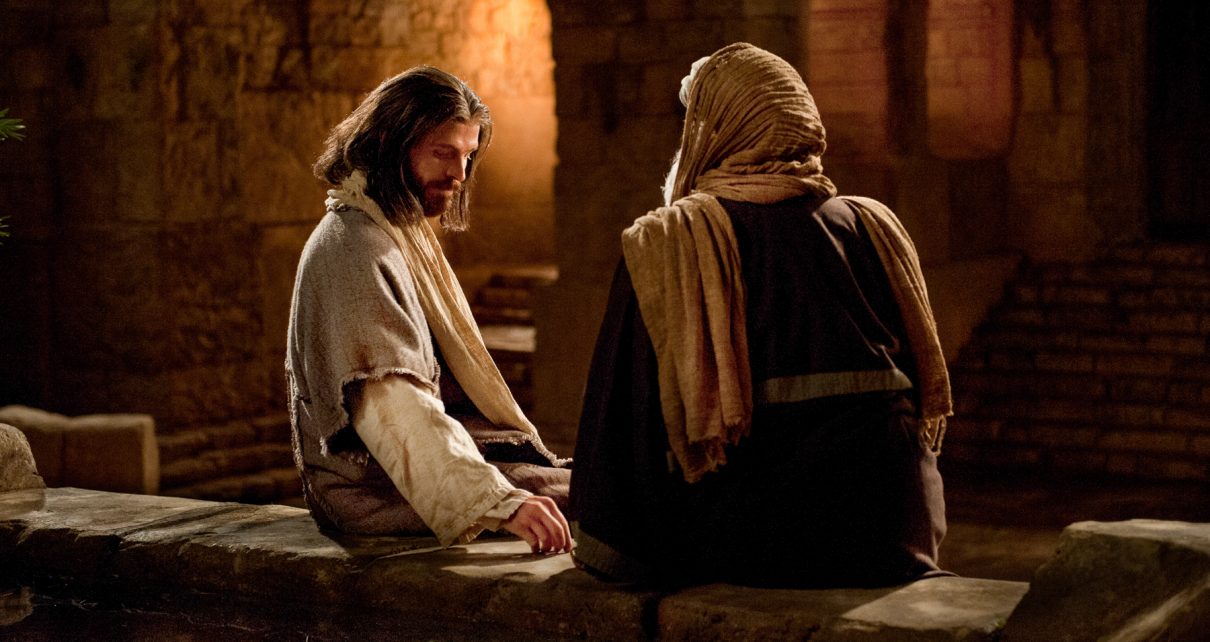
NOT TO CONDEMN BUT TO SAVE
Introduction
God sent his only Son into the world to save us: Salvation. Do we need salvation? We have become so self-sufficient and proud of our human achievements that we often think that salvation belongs to another world – not ours. But when in our sober moments, we sit down and reflect, we have to face deeper realities: which achievements? For what? Have they made us happier? Have we made the world a better place to live in? And then, we realize that we cannot do it alone. Look at! Coronavirus has flabbergasted even the most powerful nations to helplessness. So, we need salvation – from ourselves, from our achievements, from our so-called progress, from incurable illness like Covid-19. And then, we become grateful for Jesus, not merely a person-for-others, but God’s Son, who is with us and who can still get us out of the mess we are often making.
1 Reading ACTS 5:17-26
The high priest rose up and all his companions, that is, the party of the Sadducees, and, filled with jealousy, laid hands upon the Apostles and put them in the public jail. But during the night, the angel of the Lord opened the doors of the prison, led them out, and said, “Go and take your place in the temple area, and tell the people everything about this life.” When they heard this, they went to the temple early in the morning and taught. When the high priest and his companions arrived, they convened the Sanhedrin, the full senate of the children of Israel, and sent to the jail to have them brought in. But the court officers who went did not find them in the prison, so they came back and reported, “We found the jail securely locked and the guards stationed outside the doors, but when we opened them, we found no one inside.” When the captain of the temple guard and the chief priests heard this report, they were at a loss about them, as to what this would come to. Then someone came in and reported to them, “The men whom you put in prison are in the temple area and are teaching the people.” Then the captain and the court officers went and brought them, but without force, because they were afraid of being stoned by the people.
Responsorial Psalm 34:2-3, 4-5, 6-7, 8-9
R. (7a) The Lord hears the cry of the poor. or: R. Alleluia.
I will bless the LORD at all times;
his praise shall be ever in my mouth.
Let my soul glory in the LORD;
the lowly will hear me and be glad. R.
Glorify the LORD with me,
let us together extol his name.
I sought the LORD, and he answered me
and delivered me from all my fears. R.
Look to him that you may be radiant with joy,
and your faces may not blush with shame.
When the poor one called out, the LORD heard,
and from all his distress he saved him. R.
The angel of the LORD encamps
around those who fear him, and delivers them.
Taste and see how good the LORD is;
blessed the man who takes refuge in him. R.
Alleluia John 3:16
R. Alleluia, alleluia.
God so loved the world that he gave his only-begotten Son,
so that everyone who believes in him might have eternal life.
R. Alleluia, alleluia.
Gospel John 3:16-21
Jesus said to Nicodemus, “God so loved the world that he gave his only-begotten Son, so that everyone who believes in him might not perish but might have eternal life. For God did not send his Son into the world to condemn the world, but that the world might be saved through him. Whoever believes in him will not be condemned, but whoever does not believe has already been condemned, because he has not believed in the name of the only-begotten Son of God. And this is the verdict, that the light came into the world, but people preferred darkness to light, because their works were evil. For everyone who does wicked things hates the light and does not come toward the light, so that his works might not be exposed. But whoever lives the truth comes to the light, so that his works may be clearly seen as done in God.”
Commentary
Among the factors that many of the New Testament personalities had in common, one often unmentioned is the fact that many of them had to do “jail time.” From John the Baptist to Jesus to Peter and Paul, encounters with religious and civil authorities often led to imprisonment. In today’s reading from Acts of the Apostles, the apostles as a group are apprehended but then set free by divine intervention; they return to their preaching mission, much to the amazement of their stunned jailers.
We are reminded in today’s Gospel that no human judgment can compare with that which comes from the rejection of God’s Son. The term ‘world’ is used in two different senses in John’s Gospel. Used negatively, it is the arena where evil is at play and therefore worthy of disdain. In the positive sense, it is the focus of God’s love, the locus of redemption, the springboard to eternal life.
Where condemnation enters the picture, it is self-inflicted. It is a question of refusing God’s Son and choosing darkness over the light. Works that are evil survive only in the realm of darkness, while those who have the truth love the light and have nothing to fear.
As the baptized we have been snatched from the grasp of evil. We are people of light, truth adherents. Therefore, we are called to walk in the daylight, to do the work of God, with no fear of the dark. The only imprisonment that we have to fear is that of the soul. The “jail time” served in the New Testament was productive of good. But if the spirit is imprisoned we sit in darkness and death.
Taste and see how good the Lord is; happy the person who takes refuge in him.
Blessing
God did not send Jesus into the world to condemn it. With Jesus and through him, we are part of that plan. May the Almighty God bless you, the Father, and the Son, and the Holy Spirit. Amen!