

—- St Pius X – Pray for Us!
WHOEVER HUMBLES ONESELF WILL BE EXALTED
Introduction
Ruth had adopted the ways of her deceased Jewish husband. Now, she is adopted into God’s people (like grace, payback for her steadfast love). We talked extensively about her yesterday.
The Lord abhors duplicity and hypocrisy, particularly in religious leaders. The scribes had rendered a real service by becoming the teachers of Israel during the exile, when the priesthood was on the decline, but later, they had gradually turned religious living into a complicated intellectualistic, legalistic and casuistic system of observances, which they themselves did not fully practice. It had become the pride and boast of the pious Pharisees to observe them all and in this way to work their own salvation. On account of this pride, they lacked the true spirit and humility of openness to God’s plans.
Opening Prayer
Lord God, you are pure grace.
You fill with your forgiveness and life
those who recognize their own emptiness
and the need for your mercy.
Grant us not to call attention
to ourselves and the good you allow us to do,
but to serve you and people
in the unsophisticated simplicity of our hearts
and to give all glory and honour to you,
for the life and grace you bring us
through Jesus Christ, our Lord. Amen!
1 Reading: Ruth 2:1-3, 8-11; 4:13-17
Now Naomi (Ruth’s mother-in-law) had a kinsman on her husband’s side, a prominent rich man, of the family of Elimelech, whose name was Boaz. And Ruth the Moabite said to Naomi, “Let me go to the field and glean among the ears of grain, behind someone in whose sight I may find favour.” She said to her, “Go, my daughter.” So she went. She came and gleaned in the field behind the reapers. As it happened, she came to the part of the field belonging to Boaz, who was of the family of Elimelech. Then Boaz said to Ruth, “Now listen, my daughter, do not go to glean in another field or leave this one, but keep close to my young women. Keep your eyes on the field that is being reaped, and follow behind them. I have ordered the young men not to bother you. If you get thirsty, go to the vessels and drink from what the young men have drawn.” Then she fell prostrate, with her face to the ground, and said to him, “Why have I found favour in your sight, that you should take notice of me, when I am a foreigner?” But Boaz answered her, “All that you have done for your mother-in-law since the death of your husband has been fully told me, and how you left your father and mother and your native land and came to a people that you did not know before. So Boaz took Ruth and she became his wife. When they came together, the Lord made her conceive, and she bore a son. Then the women said to Naomi, “Blessed be the Lord, who has not left you this day without next-of-kin; and may his name be renowned in Israel! He shall be to you a restorer of life and a nourisher of your old age; for your daughter-in-law who loves you, who is more to you than seven sons, has borne him.” Then Naomi took the child and laid him in her bosom, and became his nurse. The women of the neighbourhood gave him a name, saying, “A son has been born to Naomi.” They named him Obed; he became the father of Jesse, the father of David.
Responsorial Psalm 128:1b-2, 3, 4, 5
R. (4) See how the Lord blesses those who fear him.
Blessed are you who fear the Lord,
Who walk in his ways!
For you shall eat the fruit of your handiwork;
Blessed shall you be, and favoured. R.
Your wife shall be like a fruitful vine in the recesses of your home;
Your children like olive plants around your table. R.
Behold, thus is the man blessed who fears the Lord. R.
The Lord bless you from Zion:
May you see the prosperity of Jerusalem all the days of your life. R.
Alleluia: Matthew 16:18
Alleluia, alleluia.
You are Peter and upon this rock I will build my Church
and the gates of the netherworld shall not prevail against it.
R. Alleluia, alleluia.
Gospel: Matthew 23:1-12
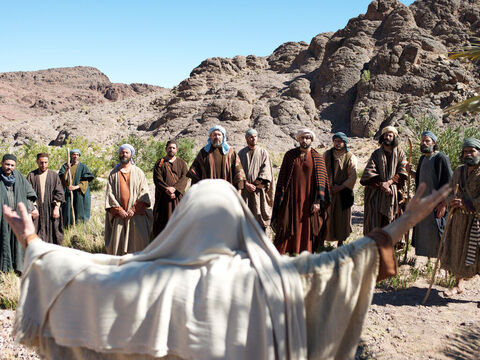
Then Jesus said to the crowds and to his disciples, “The scribes and the Pharisees sit on Moses’ seat; therefore, do whatever they teach you and follow it; but do not do as they do, for they do not practice what they teach. They tie up heavy burdens, hard to bear, and lay them on the shoulders of others; but they themselves are unwilling to lift a finger to move them. They do all their deeds to be seen by others; for they make their phylacteries broad and their fringes long. They love to have the place of honour at banquets and the best seats in the synagogues, and to be greeted with respect in the marketplaces, and to have people call them rabbi. But you are not to be called rabbi, for you have one teacher, and you are all students. And call no one your father on earth, for you have one Father – the one in heaven. Nor are you to be called instructors, for you have one instructor, the Messiah. The greatest among you will be your servant. All who exalt themselves will be humbled, and all who humble themselves will be exalted.”
Commentary
Meditation: Who doesn’t desire the praise and respect of others? We want others to see us at our best with all of our strengths and achievements – rather than at our worst with all of our faults and shortcomings. God sees us as we truly are – sinners and beggars always in need of his mercy, help, and guidance. Jesus warned the scribes and Pharisees, the teachers and rulers of Israel, to teach and serve their people with humility and sincerity rather than with pride and self-promotion. They went to great lengths to draw attention to their religious status and practices. In a way they wanted to be good models of observant Jews. “See how well we observe all the ritual rules and regulations of our religion!” In their misguided zeal for religion they sought recognition and honour for themselves rather than for God. They made the practice of their faith a burden rather than a joy for the people they were supposed to serve. Same with religious practice in Nigeria. Highly political and major source of division. It is said often, if Islam means peace, and Christianity love, why the religious strife in Nigeria. God save us.
True respect for God inclines us to humble ourselves and to submit to his wisdom and guidance. We cannot be taught by God unless we first learn to listen to his word and then obey his instruction. The humble is God’s child.
Intercessions
– For the People of God, that with courage and honesty, we may take to heart the task of renewal and reconciliation, so as to show to the world of today the true face of Christ, we pray:
– For all who seek God with a sincere heart, for all who search for truth and justice, that their hunger may be satisfied, we pray:
– For all Christian communities, that we may be reliable and truthful with one another and that our unity and friendship may be genuine, we pray:
Prayer over the Gifts
Lord God, merciful Father,
in these simple signs of bread and wine,
you give us the servant of all,
your Son, Jesus Christ.
Fill us with his Spirit
of unpretentious service.
Help us to recognize him
as our only source of truth and life,
that you may be our only God and Father,
now and for ever. Amen!
Prayer after Communion
Lord God,
we thank you for your Son, Jesus Christ.
He was straightforward
in all he said and did;
he practiced the message he brought to others
and it cost him his life.
Help us to believe his Good News
with the whole of our being
and to live by it day after day
in simple sincerity, without any display.
May you thus, recognize
the love of your Son present in us
and give us a share in your happiness for ever. Amen!
Blessing
We believe in Jesus and in his Gospel. Let our lives not contradict our faith, but let our lives tell the story of that faith, with the blessing of Almighty God, the Father, and the Son, and the Holy Spirit. Amen!
Further Commentaries on important themes of the Gospel:
One Father and Teacher
Was Jesus against calling anyone a rabbi, the Jewish title for a teacher of God’s word (Matthew 23:7-8), or a father? The law of Moses in Scripture specifically instructed all fathers to be teachers and instructors for their children to help them understand and obey God’s instructions (Deuteronomy 6:7)? Why did Jesus rebuke the scribes and Pharisees, the religious authorities of the Jewish people, in the presence of his disciples? Jesus wanted to warn both his own disciples and the religious leaders about the temptation to seek honours and titles that draw attention to ourselves in place of God and his word. Pride tempts us to put ourselves first above others.
The Scriptures give ample warning about the danger of self-seeking pride: Pride goes before destruction, and a haughty spirit before a fall (Proverbs 16:18). God opposes the proud, but gives grace to the humble (James 4:6; Proverbs 3:24).
Origen of Alexandria (185-254 AD), an early Christian teacher and bible scholar, reminds those who teach and lead to remember that they are first and foremost “disciples” and “servants” who sit at the feet of their Master and Teacher the Lord Jesus Christ:
“You have one teacher, and you are all brothers to each other…Whoever ministers with the divine word does not put himself forward to be called teacher, for he knows that when he performs well it is Christ who is within him. He should only call himself servant according to the command of Christ, saying, ‘Whoever is greater among you, let him be the servant of all.’”
True humility
Respect for God and for his ways inclines us to humility and to simplicity of heart – the willing readiness to seek the one true good who is God himself. What is the nature of true humility and why should we embrace it as essential for our lives? We can easily mistake humility as something demeaning or harmful to our sense of well-being and feeling good about ourselves. True humility is not feeling bad about yourself, or having a low opinion of yourself, or thinking of yourself as inferior to all others. True humility frees us from preoccupation with ourselves, whereas a low self-opinion tends to focus our attention on ourselves. Humility is truth in self-understanding and truth in action. Viewing ourselves honestly, with sober judgment, means seeing ourselves the way God sees us (Psalm 139:1-4).
A humble person makes a realistic assessment of oneself without illusion or pretence to be something one is not. A truly humble person regards oneself neither smaller nor larger than one truly is. True humility frees us to be ourselves as God regards us and to avoid falling into despair and pride. A humble person does not want to wear a mask or put on a facade in order to look good to others. Such a person is not swayed by accidentals, such as fame, reputation, success, or failure. Do you know the joy of Christ-like humility and simplicity of heart?
Humility is the queen or foundation of all the other virtues because it enables us to see and judge correctly, the way God sees. Humility helps us to be teachable so we can acquire true knowledge, wisdom, and an honest view of reality. It directs our energy, zeal, and will to give ourselves to something greater than ourselves. Humility frees us to love and serve others willingly and selflessly, for their own sake, rather than for our own. Paul the Apostle gives us the greatest example and model of humility in the person of Jesus Christ, who emptied himself, taking the form of a servant, and… who humbled himself and became obedient unto death, even death on a cross (Philippians 2:7-8). Do you want to be a servant as Jesus loved and served others? The Lord Jesus gives us his heart – the heart of a servant who seeks the good of others and puts their interests first in his care and concern for them.
“Lord Jesus, you became a servant for my sake to set me free from the tyranny of selfish pride and self-concern. Teach me to be humble as you are humble and to love others generously with selfless service and kindness.”