

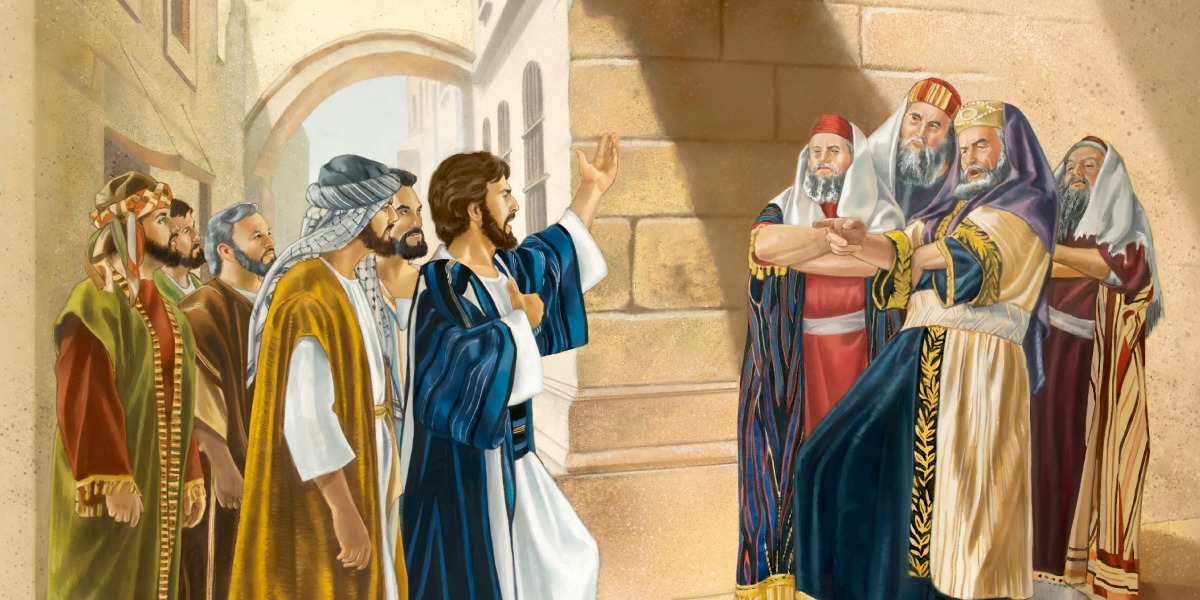
A prophet Without Honour
Introduction
God gave feasts to the Jews and to us not merely to celebrate His wonderful deeds of the past but to relive them in the present and to draw strength from them for the future. Modern society has largely lost the sense of festivity. We go to sport festivals or watch them on TV: they are spectacles to be watched, not to participate in. We have turned religious feasts into Sundays and holidays of obligation. But joy, spontaneity, sharing and encounters cannot be commandeered. We have to create the sense of true community wherein there is again room for creativity, spontaneous joy, a sense of gratuitousness. Our ultimate destiny is not to work but to love…
Jesus is not welcome either among his people, in his town, his home country, for he is disturbing people’s consciences. He confronts them with the challenging reality of God and his ways. Christ shakes his people from their security in laws and outward practices. How dare he, one from their own town and street? Who does he think he is? Dare we to be the prophet’s voice needed today? Dare we to be unconventional? He is a prophet without honour. And they lost his divine intervention.
1 Reading: Leviticus 23:1, 4-11, 15-16, 27, 34b-37
The LORD said to Moses, “These are the festivals of the LORD which you shall celebrate at their proper time with a sacred assembly. The Passover of the LORD falls on the fourteenth day of the first month, at the evening twilight. The fifteenth day of this month is the LORD’s feast of Unleavened Bread. For seven days you shall eat unleavened bread. On the first of these days you shall hold a sacred assembly and do no sort of work. On each of the seven days you shall offer an oblation to the LORD. Then on the seventh day you shall again hold a sacred assembly and do no sort of work.” The LORD said to Moses, “Speak to the children of Israel and tell them: When you come into the land which I am giving you, and reap your harvest, you shall bring a sheaf of the first fruits of your harvest to the priest, who shall wave the sheaf before the LORD that it may be acceptable for you. On the day after the Sabbath the priest shall do this. “Beginning with the day after the Sabbath, the day on which you bring the wave-offering sheaf, you shall count seven full weeks, and then on the day after the seventh week, the fiftieth day, you shall present the new cereal offering to the LORD. “The tenth of this seventh month is the Day of Atonement, when you shall hold a sacred assembly and mortify yourselves and offer an oblation to the LORD. “The fifteenth day of this seventh month is the LORD’s feast of Booths, which shall continue for seven days. On the first day there shall be a sacred assembly, and you shall do no sort of work. For seven days you shall offer an oblation to the LORD, and on the eighth day you shall again hold a sacred assembly and offer an oblation to the LORD. On that solemn closing you shall do no sort of work. “These, therefore, are the festivals of the LORD on which you shall proclaim a sacred assembly, and offer as an oblation to the LORD burnt offerings and cereal offerings, sacrifices and libations, as prescribed for each day.”
Responsorial Psalm: Ps 81:3-4, 5-6, 10-11ab
R. (2a) Sing with joy to God our help.
Take up a melody, and sound the timbrel,
the pleasant harp and the lyre.
Blow the trumpet at the new moon,
at the full moon, on our solemn feast. R.
For it is a statute in Israel,
an ordinance of the God of Jacob,
Who made it a decree for Joseph
when he came forth from the land of Egypt. R.
There shall be no strange god among you
nor shall you worship any alien god.
I, the LORD, am your God
who led you forth from the land of Egypt. R.
Alleluia: 1 Peter 1:25
R. Alleluia, alleluia.
The word of the Lord remains forever;
This is the word that has been proclaimed to you.
R. Alleluia, alleluia.
Gospel: Matthew 13:54-58
Jesus came to his native place and taught the people in their synagogue. They were astonished and said, “Where did this man get such wisdom and mighty deeds? Is he not the carpenter’s son? Is not his mother named Mary and his brothers James, Joseph, Simon, and Judas? Are not his sisters all with us? Where did this man get all this?” And they took offense at him. But Jesus said to them, “A prophet is not without honour except in his native place and in his own house.” And he did not work many mighty deeds there because of their lack of faith.
Commentary
Three of Israel’s major feasts are cited in today’s first reading: Passover-Unleavened Bread, the Day of Atonement, and the feast of Booths. The first recalls the redemption of God’s people from the slavery of Egypt; the second was the annual day of prayer for forgiveness of sin; and the third a feast of thanksgiving for the fruit of the harvest.
We are reminded that this threefold approach to God is paralleled in our Catholic liturgical life. Our Passover is celebrated in our Holy Week Triduum and Easter; our atonement in the Lenten season; and thanksgiving in every Eucharist that is offered. And it represents an excellent summary of our Christian experience. We are redeemed by the blood of the Lamb of God, the Son of the eternal Father. Our failings are repeatedly forgiven by an all-good and merciful God. And our life is one of gratitude for all that God has done for us.
Christ, our deliverer and Saviour, we are grateful for our new life in you and for the forgiveness of our sins. Make of our lives a continual hymn of gratitude.
Blessing
How good that there are feasts and celebrations in our life, that is, days when we can be playful and free, relaxed and carefree like the birds in the air, because we know that we are in the hands of God. For he cares. May almighty God bless you, the Father, and the Son, and the Holy Spirit. Amen!