

Emulating The Prophets Of Truth
Introduction
In the Old Testament, the prophet Elijah is the “prophet of fire,” a fiery, zealous personality who makes fire come down on the enemies of God. He wanted to prepare the hearts of the people to accept God.
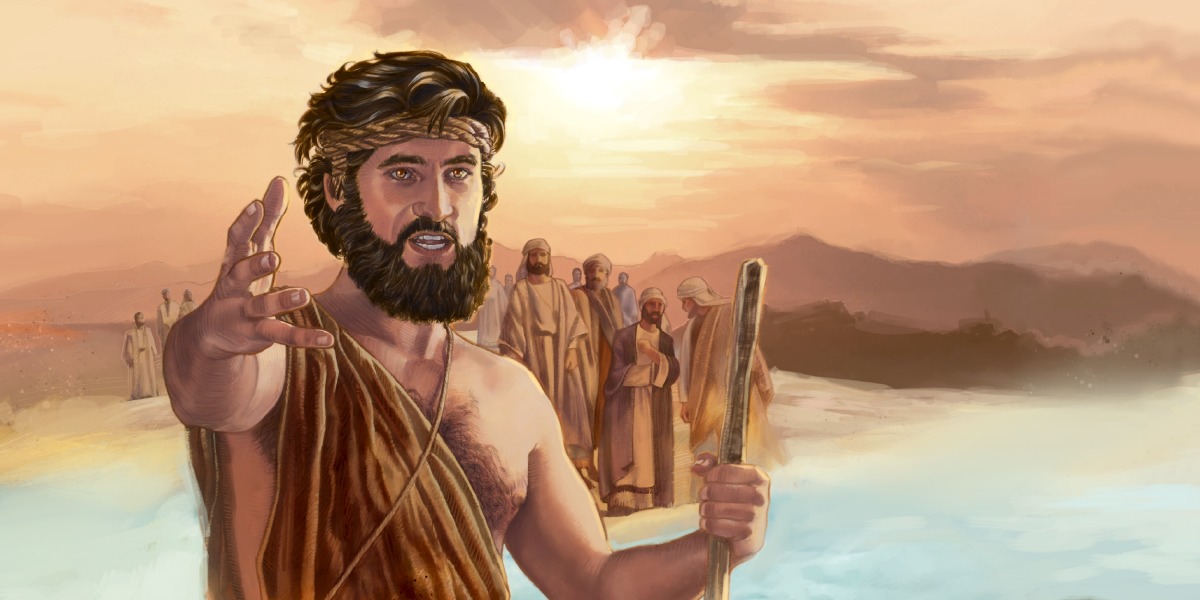
In the New Testament, the “prophet of fire,” the new Elijah, was John the Baptist. Full of zeal, he wanted to prepare the hearts of the people to accept Jesus as the saving Messiah. Who is calling us to conversion today and opening our hearts to make Christ alive in us? It is the Spirit of fire, who wants us to do with great zeal and love the work of Christ, that is, to bring the love, peace and justice of God in today’s world. Do we let the Spirit kindle that fire in us?
1 Reading: Sirach 48:1-4, 9-11
In those days, like a fire there appeared the prophet Elijah whose words were as a flaming furnace. Their staff of bread he shattered, in his zeal he reduced them to straits; By the Lord’s word he shut up the heavens and three times brought down fire. How awesome are you, Elijah, in your wondrous deeds! Whose glory is equal to yours? You were taken aloft in a whirlwind of fire, in a chariot with fiery horses. You were destined, it is written, in time to come to put an end to wrath before the day of the LORD, To turn back the hearts of fathers toward their sons, and to re-establish the tribes of Jacob. Blessed is he who shall have seen you and who falls asleep in your friendship.
Responsorial Psalm: Ps 80:2AC and 3B, 15-16, 18-19
R. (4) Lord, make us turn to you; let us see your face and we shall be saved.
O shepherd of Israel, hearken,
From your throne upon the cherubim, shine forth.
Rouse your power. R.
Once again, O LORD of hosts,
look down from heaven, and see;
Take care of this vine,
and protect what your right hand has planted
the son of man whom you yourself made strong. R.
May your help be with the man of your right hand,
with the son of man whom you yourself made strong.
Then we will no more withdraw from you;
give us new life, and we will call upon your name. R.
Alleluia Luke 3:4, 6
R. Alleluia, alleluia.
Prepare the way of the Lord, make straight his paths:
All flesh shall see the salvation of God.
R. Alleluia, alleluia.
Gospel: Matthew 17:9A, 10-13
As they were coming down from the mountain, the disciples asked Jesus, “Why do the scribes say that Elijah must come first?” He said in reply, “Elijah will indeed come and restore all things; but I tell you that Elijah has already come, and they did not recognize him but did to him whatever they pleased. So also will the Son of Man suffer at their hands.” Then the disciples understood that he was speaking to them of John the Baptist.
Commentary
Elijah is an Advent prophet; he played a key role in Israel’s hope for the future. As Sirach states in today’s reading, Elijah was taken to heaven in a whirlwind without undergoing death, and it was expected that he would return. That return became identified with the end of time. The Matthean Jesus clearly sees John the Baptist as Elijah, coming as he did at the dawn of the messianic age and calling for a change of heart.
But it was an appearance that turned out to be more chilling than thrilling. Finding his message unacceptable, John’s opponents made him pay a dear price for speaking the truth of righteousness. His head was served on a platter to the illicit wife of a sensuous king.
And it was no different in Jesus’ case. The path of suffering and death was already laid out for him. An inglorious outcome for one who had come with a message of respect, concern for others (especially the poor), and an embrace for people of every station in life. It is all very ironic. John and Jesus sentenced and killed because of the truth. It is a lesson in life that has been too often repeated.
Violence begets violence. Yet humanity has not learned the lesson. Conversation and dialogue is the only answer to disagreement. Catherine of Siena bridged an ecclesiastical impasse by convincing the Pope in France to return to Rome rather than remain in exile. The Christian crusaders went to the Holy Land with scimitars and swords to retake the holy places. Francis of Assisi took another strategy and made a personal visit to the Muslim sultan to attempt a solution.
Peace often comes at a dear price. But peaceful conversation is worth much more than violence. Is not the same true of family disputes and disagreements? What is gained by hostility and aloofness? Only greater pain, and the realization that Christianity calls for something more.
The return of Elijah was viewed as a time “to turn the hearts of parents to their children.” Too many families suffer from alienation. Elijah, John, and Jesus were reconciling figures who wanted only to speak the truth. They offer us food for thought. Practical example to emulate.
Blessing
May there be fire in us, the fire of the Spirit that inspires us to love and to serve without measure, with the blessing of Almighty God, the Father, and the Son, and the Holy Spirit. Amen!