

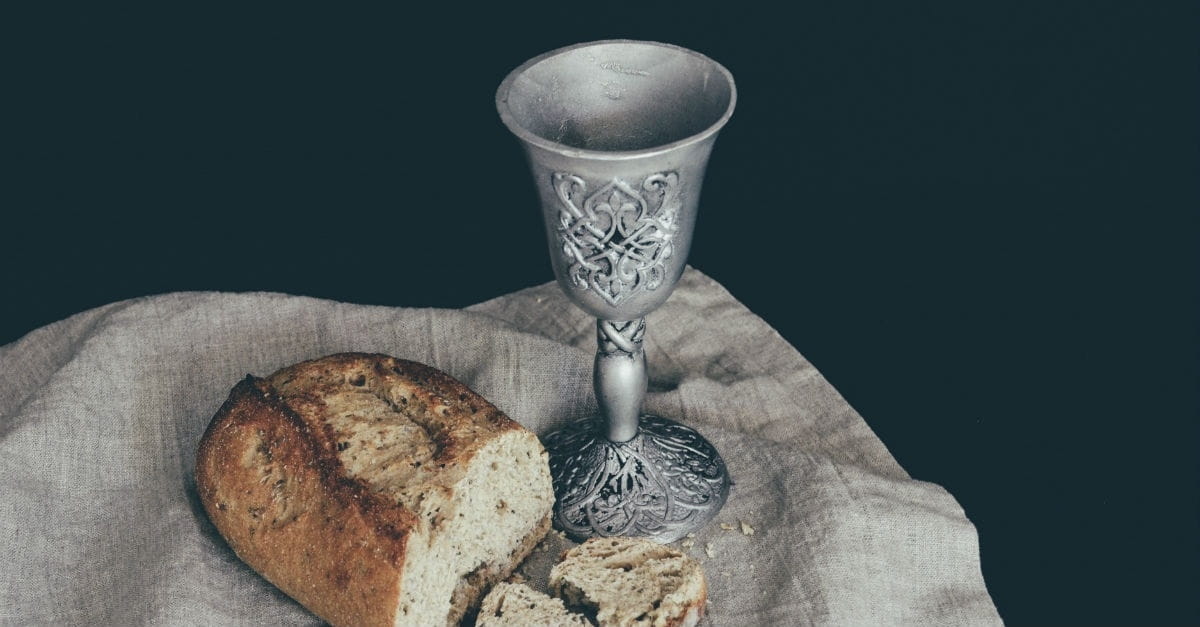
In His Blood He Makes Us His Very Own Self
Introduction
Today’s first reading describes the rite of the covenant, by which Israel became God’s chosen people with whom God made a blood compact, a sanduguan (in Filipino traditional culture), whereby they became his blood relations. “I am the Lord your God” (in the singular, “thy” term of intimacy). The tremendous, inaccessible God of Sinai is the God who is present to every person and who accepts to go along with people in their adventures of hope and love, of life and death. He is the God of his people. By taking the risk to be with us, he obliges us to take the risk of faith to seek him and to be near to him. Christ will raise this covenant to a higher and deeper level and make it everlasting. At the heart of every Eucharist, in the consecration, he tells us: “You are my blood brothers and sisters. This is the blood of the new and everlasting covenant.” “You eat my body and drink my blood, hence, you are me and I am you.”
All around us, but in our hearts as well, weeds are growing together with the wheat – the bad with the good. This is life, and it is not easy to take. We see first of all the weeds growing in the garden of our neighbour, and we want him to pull them out. But we should look into our own hearts as well. What to do? To pluck out the bad as best as we can. And not to be upset that, after all, we are not entirely good. We have to live with it in faith and in hope and leave it all in the hands of God.
1 Reading: Exodus 24:3-8
When Moses came to the people and related all the words and ordinances of the LORD, they all answered with one voice, “We will do everything that the LORD has told us.” Moses then wrote down all the words of the LORD and, rising early the next day, he erected at the foot of the mountain an altar and twelve pillars for the twelve tribes of Israel. Then, having sent certain young men of the children of Israel to offer burnt offerings and sacrifice young bulls as peace offerings to the LORD, Moses took half of the blood and put it in large bowls; the other half he splashed on the altar. Taking the book of the covenant, he read it aloud to the people, who answered, “All that the LORD has said, we will heed and do.” Then he took the blood and sprinkled it on the people, saying, “This is the blood of the covenant that the LORD has made with you in accordance with all these words of his.”
Responsorial Psalm: Ps 50:1b-2, 5-6, 14-15
R. (14a) Offer to God a sacrifice of praise.
God the LORD has spoken and summoned the earth,
from the rising of the sun to its setting.
From Zion, perfect in beauty,
God shines forth. R.
“Gather my faithful ones before me,
those who have made a covenant with me by sacrifice.”
And the heavens proclaim his justice;
for God himself is the judge. R.
“Offer to God praise as your sacrifice
and fulfill your vows to the Most High;
Then call upon me in time of distress;
I will rescue you, and you shall glorify me.” R.
Alleluia: Jas 1:21bc
R. Alleluia, alleluia.
Humbly welcome the word that has been planted in you
and is able to save your souls.
R. Alleluia, alleluia.
Gospel: Matthew 13:24-30
Jesus proposed a parable to the crowds. “The Kingdom of heaven may be likened to a man who sowed good seed in his field. While everyone was asleep his enemy came and sowed weeds all through the wheat, and then went off. When the crop grew and bore fruit, the weeds appeared as well. The slaves of the householder came to him and said, ‘Master, did you not sow good seed in your field? Where have the weeds come from?’ He answered, ‘An enemy has done this.’ His slaves said to him, ‘Do you want us to go and pull them up?’ He replied, ‘No, if you pull up the weeds you might uproot the wheat along with them. Let them grow together until harvest; then at harvest time I will say to the harvesters, “First collect the weeds and tie them in bundles for burning; but gather the wheat into my barn.”‘”
Commentary
The covenant between Yahweh and Israel on Mount Sinai was essentially bilateral. It required the agreement of both parties. In today’s reading from Exodus 24, the covenant is solemnized. In response to Yahweh’s question as to their willingness to observe the covenant terms, the people respond in the affirmative. The bond is then actualized in blood. For the Hebrews, life was in the blood, which made of it a sacred element. An altar had been erected that symbolized God himself. A portion of the animal blood is sprinkled on the altar and a portion on the people, thus bonding the two together in a permanent and sacred relationship. The words of Moses are climactic—“See the blood of the covenant”—and will be heard again at the Last Supper. Christ has made of us a holy people, a priestly people in his own sacrificial blood. We are continually reminded that we stem from a rich tradition. It is only from an understanding of our Hebrew roots that we begin to understand our relationship to God.
The wheat and the weeds, the good and the bad. We live in a distinctly imperfect world, of course, in an imperfect church. It is unrealistic to believe that the church is made up of only the perfect. It is encouraging to know that we are surrounded by the weak and the strong. And God allows us to share the same space and grow together. It means that the goal is open to all of us, and progress is never out of sight. The offer is always present.
Blessing
Here is the covenant that the Lord has made with us. If only we were more aware of how near to us God wanted to be. May God keep you in his love and bless you, the Father, and the Son, and the Holy Spirit. Amen!