

Called to Be Apostles, Prophets, Evangelists, Pastors, Teachers
Introduction
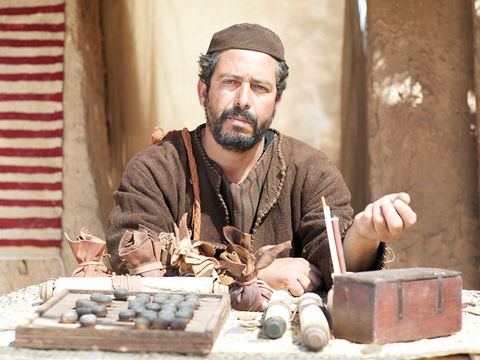
From a despised tax-collector, appraised no higher than a public sinner, shameless thief (politician) or a pagan, Matthew becomes an apostle. He is a living proof that Jesus came to call sinners. And among the apostles he is one of the two who witnessed to Christ not only with their life and work but also their writing. He is with us today to strengthen our faith. He shows how Jesus is the fulfillment of the scriptures and how our communities today, like his long ago, have to put the Good News of Jesus into practice.
1 Reading: Ephesians 4:1–7, 11–13
Brothers and sisters, I, a prisoner for the Lord, urge you to live in a manner worthy of the call you have received, with all humility and gentleness, with patience, bearing with one another through love, striving to preserve the unity of the spirit through the bond of peace: one Body and one Spirit, as you were also called to the one hope of your call; one Lord, one faith, one baptism; one God and Father of all, who is over all and through all and in all. But grace was given to each of us according to the measure of Christ’s gift. And he gave some as Apostles, others as prophets, others as evangelists, others as pastors and teachers, to equip the holy ones for the work of ministry, for building up the Body of Christ, until we all attain to the unity of faith and knowledge of the Son of God, to mature to manhood, to the extent of the full stature of Christ.
Responsorial Psalm: Ps 19:2–3, 4–5
R. Their message goes out through all the earth.
The heavens declare the glory of God;
and the firmament proclaims his handiwork.
Day pours out the word to day,
and night to night imparts knowledge. R.
Not a word nor a discourse
whose voice is not heard;
Through all the earth their voice resounds,
and to the ends of the world, their message. R.
Gospel: Matthew 9:9-13
As Jesus moved on, he saw a man named Matthew at his seat in the custom-house, and he said to him, “Follow me.” And Matthew got up and followed him. Now it happened, while Jesus was at table in Matthew’s house, many tax collectors and other sinners joined Jesus and his disciples. When the Pharisees saw this they said to his disciples, “Why is it that your master eats with those sinners and tax collectors?” When Jesus heard this he said, “Healthy people do not need a doctor, but sick people do. Go and find out what this means: What I want is mercy, not sacrifice. I did not come to call the righteous but sinners.”
Commentary
Matthew is an evangelist, a prophet, and one of the Twelve. We all share the same hope and the same call (as apostles, prophets, evangelists, pastors and teachers) and so must make every effort to preserve unity among us. We must all strive to build up one another in the knowledge of God’s Son and to share the favour that has been given to us. Matthew’s gospel emphasizes many of these exhortations because his community was being torn apart by persecution by the Romans and the Jews and they are struggling as Jewish and Gentile Christians to be one heart and mind in Christ.
Matthew was a tax collector. He stops taking from others to give to the state and the temple treasury. He begins giving out the mercy and healing/health of mind/soul/spirit that Jesus so graciously offered to him. What are we called to leave behind so that we can begin giving to each other?
Blessing
“I desire mercy, not sacrifice. I have come to call not the righteous but sinners.” Let these words change our attitude toward people, also toward ourselves, and make us mild and understanding to everyone, with the blessing of almighty God, the Father, and the Son, and the Holy Spirit. Amen!