

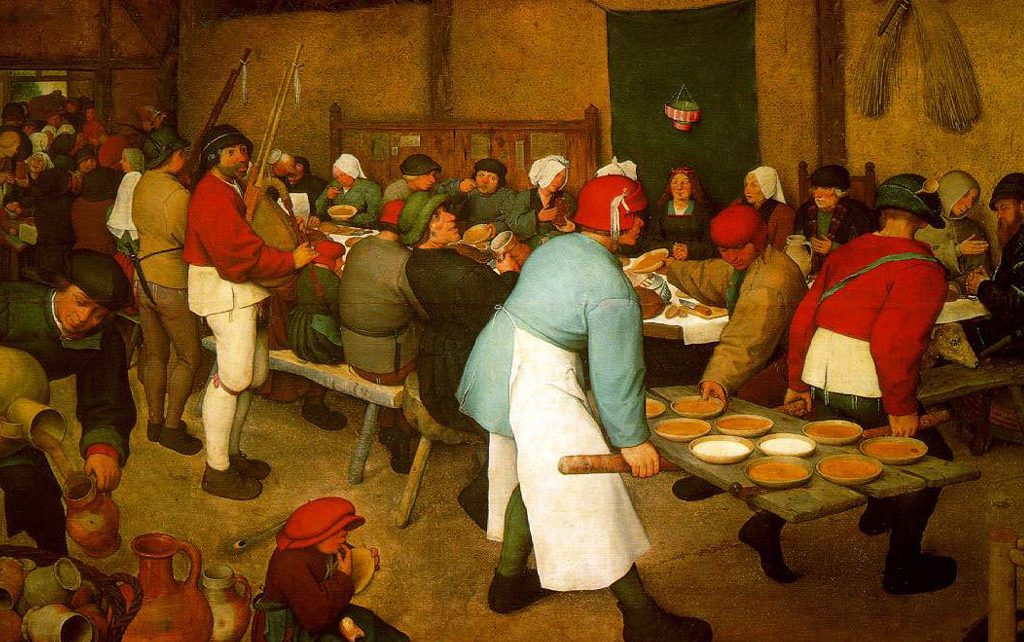
We All Are The Invited Guests At The Same Table
Introduction
We belong together as members of the same body of Christ, each with one’s gifts and talents, with one’s own contribution to make for the well-being of the whole and for the service of others, in the solidarity of one common destiny in Christ. We are like guests at the same table, where there is room for everyone, also for those who are the last and the least in our merely human system of values. We belong together at the same table.
Today’s Gospel has partly the same theme as that of yesterday: that in the kingdom of God, we have to open our homes and hearts to the poor, the neglected, the people without name or fame.
1 Reading: Romans 12:5-16ab
Brothers and sisters: We, though many, are one Body in Christ and individually parts of one another. Since we have gifts that differ according to the grace given to us, let us exercise them: if prophecy, in proportion to the faith; if ministry, in ministering; if one is a teacher, in teaching; if one exhorts, in exhortation; if one contributes, in generosity; if one is over others, with diligence; if one does acts of mercy, with cheerfulness. Let love be sincere; hate what is evil, hold on to what is good; love one another with mutual affection; anticipate one another in showing honour. Do not grow slack in zeal, be fervent in spirit, serve the Lord. Rejoice in hope, endure in affliction, persevere in prayer. Contribute to the needs of the holy ones, exercise hospitality. Bless those who persecute you, bless and do not curse them. Rejoice with those who rejoice, weep with those who weep. Have the same regard for one another; do not be haughty but associate with the lowly.
Responsorial Psalm: Ps 131:1bcde, 2, 3
R. In you, O Lord, I have found my peace.
O LORD, my heart is not proud,
nor are my eyes haughty;
I busy not myself with great things,
nor with things too sublime for me. R.
Nay rather, I have stilled and quieted
my soul like a weaned child.
Like a weaned child on its mother’s lap,
so is my soul within me. R.
O Israel, hope in the LORD,
both now and forever. R.
Alleluia: Mt 11:28
R. Alleluia, alleluia.
Come to me, all you who labor and are burdened,
and I will give you rest, says the Lord.
R. Alleluia, alleluia.
Gospel: Luke 14:15-24
One of those at table with Jesus said to him, “Blessed is the one who will dine in the Kingdom of God.” He replied to him, “A man gave a great dinner to which he invited many. When the time for the dinner came, he dispatched his servant to say to those invited, ‘Come, everything is now ready.’ But one by one, they all began to excuse themselves. The first said to him, ‘I have purchased a field and must go to examine it; I ask you, consider me excused.’ And another said, ‘I have purchased five yoke of oxen and am on my way to evaluate them; I ask you, consider me excused.’ And another said, ‘I have just married a woman, and therefore I cannot come.’ The servant went and reported this to his master. Then the master of the house in a rage commanded his servant, ‘Go out quickly into the streets and alleys of the town and bring in here the poor and the crippled, the blind and the lame.’ The servant reported, ‘Sir, your orders have been carried out and still there is room.’ The master then ordered the servant, ‘Go out to the highways and hedgerows and make people come in that my home may be filled. For, I tell you, none of those men who were invited will taste my dinner.'”
Commentary
Jesus’ parables repeatedly register his disappointment in the poor response of his own people to his announcement of the kingdom’s inauguration. In today’s account, when told that the dinner was prepared, all the invited guests make excuses for their inability to attend. The enraged host then orders that the outcasts of the community be invited—the poor, the crippled, the blind, and the lame—from the streets and alleys of the town. With that done, there is still room for guests. The servants are then sent to the countryside—the highways and the hedgerows in order to fill the dining halls. The last two categories include the imperfect Jews from within the town and the Gentiles who are not part of the community.
We are now members of that elect community because of the Jews’ default. In Paul’s language today, we have become members of his body. Within that body, there are different functions to perform—prophecy, teaching, ministry, to mention a few—all of which are to be exercised with love and concern.
Paul goes on to speak of characteristics that typify the guests at the banquet. Cling to the good and hate what is evil. Honour, zeal, and joy are essential to all that is done. Bless those who hate you, rejoice with the joyful, and weep with the sorrowing. Respect one another and associate with the lowly.
The emphasis on human civility and the domestic virtues is not unwarranted. There are more hurts inflicted through the careless word than we can estimate. They may not be major insults, but they are unworthy of a caring community. We are, after all, grateful guests at the banquet table, and our daily conduct should reflect it.
Blessing
Extend hospitality to strangers, bless those who persecute you. Rejoice with those who rejoice, weep with those who weep. Live in harmony with one another. Quite a task! May Almighty God bless you, the Father, and the Son, and the Holy Spirit. Amen!