

Called To Serve, Not To Be Served
Introduction
A prophet is always an annoying person. His mission is to call attention to the signs of time – to denounce what no one dares denounce, to prod into action when all stand still and like to take it easy. His task is unpleasant and he carries it out reluctantly. For he is a scared man. He pleads to be excused. For he always gets into trouble. He may even be killed. That was the lot of the prophets before him and then Jesus’ lot – but through his death he won glory and brought life. Those who follow him, however timid they may be as prophets, have to share in this suffering-toward-life. They must at least learn to serve; even dedicated service brings often suffering.
1 Reading: Jeremiah 18:18-20
The people of Judah and the citizens of Jerusalem said,
“Come, let us contrive a plot against Jeremiah.
It will not mean the loss of instruction from the priests,
nor of counsel from the wise, nor of messages from the prophets.
And so, let us destroy him by his own tongue;
let us carefully note his every word.”
Heed me, O LORD,
and listen to what my adversaries say.
Must good be repaid with evil
that they should dig a pit to take my life?
Remember that I stood before you
to speak in their behalf,
to turn away your wrath from them.
Responsorial Psalm 31:5-6, 14, 15-16
R. (17b) Save me, O Lord, in your kindness.
You will free me from the snare they set for me,
for you are my refuge.
Into your hands I commend my spirit;
you will redeem me, O LORD, O faithful God. R./
I hear the whispers of the crowd, that frighten me from every side,
as they consult together against me, plotting to take my life. R./
Save me, O Lord, in your kindness.
But my trust is in you, O LORD;
I say, “You are my God.”
In your hands is my destiny; rescue me
from the clutches of my enemies and my persecutors. R./
Verse before the Gospel: John 8:12
I am the light of the world, says the Lord;
whoever follows me will have the light of life.
Gospel: Matthew 20:17-28
As Jesus was going up to Jerusalem,
he took the Twelve disciples aside by themselves,
and said to them on the way,
“Behold, we are going up to Jerusalem,
and the Son of Man will be handed over to the chief priests
and the scribes,
and they will condemn him to death,
and hand him over to the Gentiles
to be mocked and scourged and crucified,
and he will be raised on the third day.”
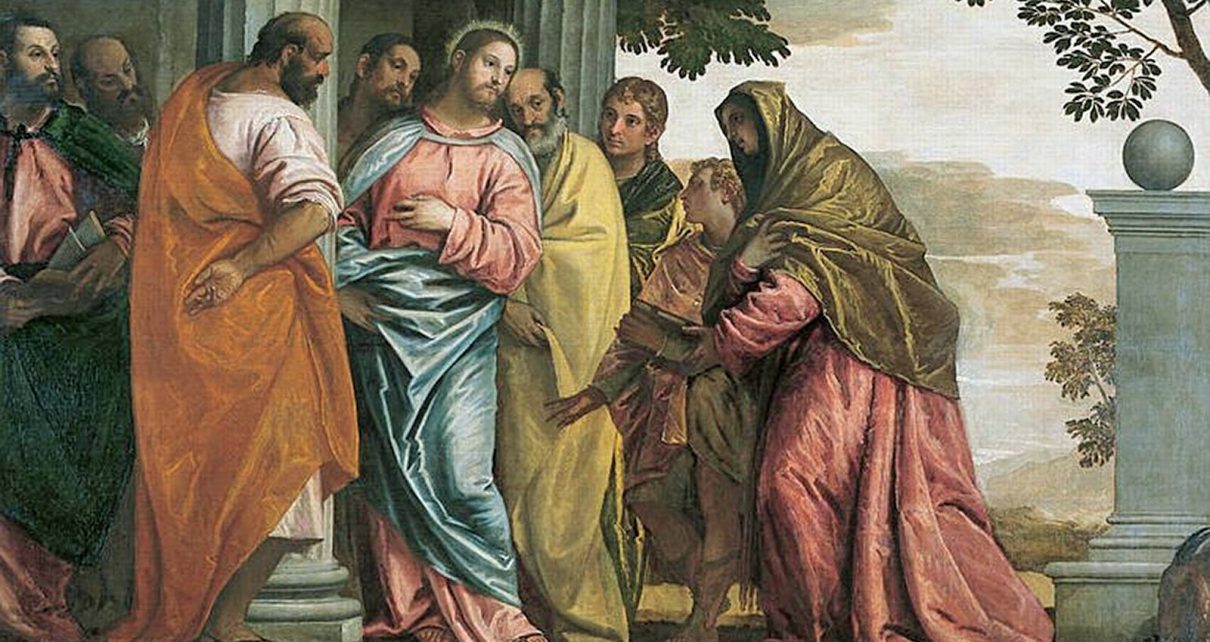
Then the mother of the sons of Zebedee approached Jesus with her sons
and did him homage, wishing to ask him for something.
He said to her, “What do you wish?”
She answered him,
“Command that these two sons of mine sit,
one at your right and the other at your left, in your kingdom.”
Jesus said in reply,
“You do not know what you are asking.
Can you drink the chalice that I am going to drink?”
They said to him, “We can.”
He replied,
“My chalice you will indeed drink,
but to sit at my right and at my left,
this is not mine to give
but is for those for whom it has been prepared by my Father.”
When the ten heard this,
they became indignant at the two brothers.
But Jesus summoned them and said,
“You know that the rulers of the Gentiles lord it over them,
and the great ones make their authority over them felt.
But it shall not be so among you.
Rather, whoever wishes to be great among you shall be your servant;
whoever wishes to be first among you shall be your slave.
Just so, the Son of Man did not come to be served but to serve
and to give his life as a ransom for many.”
Commentary
Two questions arise from a consideration of today’s scriptures. We know that there is much good in this world of ours. But why is it that it is so abused? And the second question: Why is the good so misused?
In considering Jeremiah and Jesus, we are dealing with the presence of God in the world, and yet a battery of opponents come up against both of them. Jeremiah’s opponents take steps to silence him and his prophetic voice. The prophet prays for deliverance. Jesus once again tells his disciples that there is much for him to endure before the end. He speaks of rejection, condemnation, and death. While we might admit that the message of Jesus could create controversy, it is much more difficult to understand the death he envisions, death at the hands of his enemies. And why is the good misused? The two sons of Zebedee have their sights centered on position and status. In today’s account of the request for honours, there is a slight difference from its parallel account in Mark; there the disciples themselves, not their mother, make the request. With his usual deference to the apostles, Matthew makes the request through the mother. When Jesus assures the two that they will have to drink of the cup of suffering, he indicates that places of honour don’t come without price, and are not his to give. When the other disciples initiate a conversation of dismay at the two, Christ raises the discussion to a new level.
The reign of God has nothing to do with presiding over others or receiving human recognition. There is no room there for domination or manipulation or self-seeking. It is simply a question of standing shoulder to shoulder with others in their need, of being agents of comfort, solace, and direct assistance. Had Jesus not told them that his mission was one of service, even to death? Our life is not different. It may include many hardships and inconveniences. It is a life of self-giving, not of honours. We may even have to suffer rejection. But in dedication and perseverance, our goal shall be reached.
Blessing
“The Son of man came not to be served but to serve.” How do we follow our Lord as people who know how to serve? May almighty God give you insight and strength, the Father, and the Son, and the Holy Spirit. Amen!